
Does a company really need its own office five days a week? Or does it mainly need access to the right space whenever its employees need to work?
Traditional leasing is no longer the only answer. Office as a Service (OaaS) is becoming an increasingly important approach: businesses can use ready-to-work serviced offices, coworking spaces, meeting rooms and other work environments rather than setting up and maintaining every location themselves.
That does not necessarily mean giving up a permanent headquarters. For many organizations, a hybrid office strategy (a long-term base plus flexible access to additional spaces) is more practical. This is the logic behind two complementary solutions: Cowork Booker and flex.broker.
What Is Office as a Service (OaaS)?
Office as a Service is a model in which a business pays for access to a functioning work environment, not simply an empty floor area. Depending on the provider, the service can include furniture, internet, utilities, cleaning, reception, meeting rooms, technical equipment and administrative support.
The analogy with Software as a Service (SaaS) is useful. Just as a company can use cloud software without running its own servers, it can use offices without furnishing and managing them from scratch. The product is not just square metres; it is space that is ready for work.
OaaS extends beyond a private serviced office with a monthly fee. It can include coworking, hourly or daily bookings, access to a distributed network of locations and company-wide spending budgets. In practice, it might mean a private office for six months, or a range of workplaces employees use only when needed.
Traditional Leasing, Serviced Offices or Coworking?
- Traditional lease: dedicated premises and usually a long commitment. Best for stable teams that need maximum control.
- Serviced office: a ready-to-use private office with services. A permanent base without fit-out investment.
- Managed office: space tailored to one organization. Larger teams with specific requirements.
- Coworking: shared workstations and flexible access. Individual work and variable attendance.
- On-demand workspace: hourly or daily reservations for travel, meetings and temporary projects.
- Flex Pass: a service with one stable monthly budget that unlocks access to offices across the country.
- Hybrid office model: combines permanent and flexible space for distributed teams and fluctuating needs.
None of these models is automatically the cheapest. A serviced office may cost more per desk than a conventional lease, but it can include essential services and reduce up-front spending. A desk booked every day for months might ultimately cost more than a dedicated one. The right choice depends on how often people work on-site and what they do there.
When Does a Permanent Serviced Office Make Sense?
Imagine a technology company with 20 employees in Krakow. Most people come to the office regularly and need their own monitors, privacy, a secure network and space for equipment. Booking random desks every morning would be inconvenient.
A serviced office or managed office is a sensible option here. It gives the team a consistent base and a setting for daily collaboration while the operator handles much of the workplace management. It can also be useful when opening a branch, relocating or growing a team.
flex.broker: Comparing Offices for Longer-Term Use
Finding a serviced office should not require checking dozens of operator websites and contacting each location separately about availability. flex.broker helps companies search for and compare available serviced offices, with direct contact between prospective tenants and office operators.
It supports comparing locations, desk capacity, budgets, potential move-in dates, equipment and offer terms. flex.broker addresses the question: where can we find the right office for the longer term?
When Is Hourly or Daily Office Access Better?
Consider a consulting firm with 30 employees across several cities. Some work from home, while others visit clients. The entire department meets twice a month. Maintaining 30 permanent desks would leave many unused, but doing without office space altogether would make meetings and business trips harder.
An on-demand model may be better: a desk for a day, a private room for a confidential call, a meeting room for a client presentation or a larger space for workshops. The company purchases access when a space is genuinely needed.
Cowork Booker: Workspace When You Need It
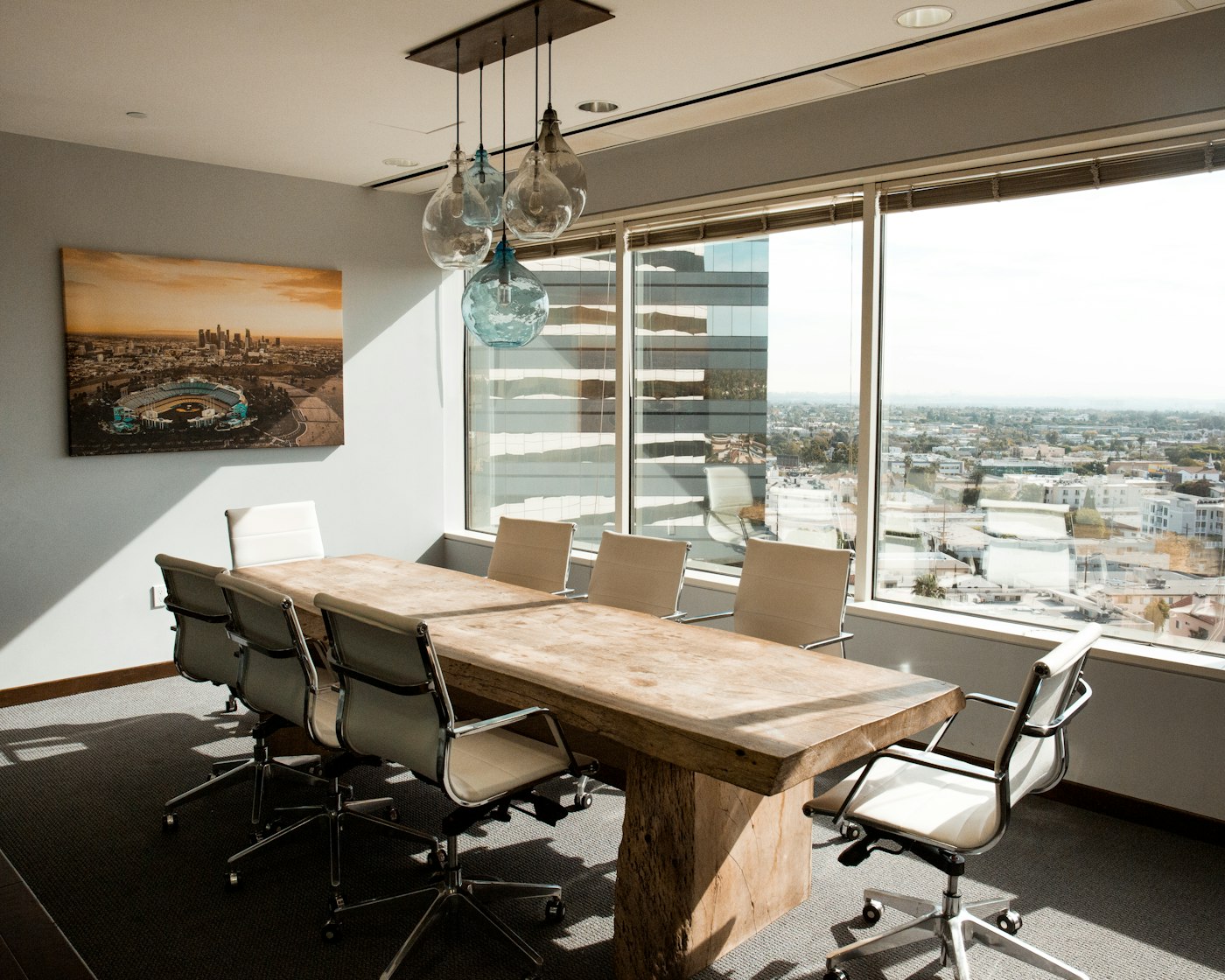
Cowork Booker helps people find and reserve flexible workplaces such as desks, coworking spaces, private offices and meeting rooms. Users select a location, date and type of space, then book online according to availability.
For employers, that means providing professional work environments without operating a fixed office in every city. The model is especially relevant to business travel, client meetings, project peaks and hybrid work. Its value increases when the users are not just individuals but an entire organization.
Flex Pass: One Monthly Budget, Many Workspaces
A traditional coworking membership is often linked to a particular building or operator network. Yet the same company may need desks, private rooms, conference facilities and workshop spaces across different locations in a single month.
Flex Pass is Cowork Booker's corporate solution built around an agreed monthly budget. Within that budget, eligible employees can use all categories of resources available on the platform: offices, coworking spaces, individual desks, meeting rooms and other listed workspaces, according to their tasks, booking availability and agreed rules.
Flex Pass is not a membership for one desk. It is a shared company budget for different work environments. Individual bookings consume that budget.
How Does Flex Pass Work in Practice?
Imagine a company with 50 employees and a monthly budget of PLN 10,000. During the month, salespeople book rooms for client meetings, remote employees reserve coworking desks, managers organize workshops and travelling staff find quiet places to work between appointments.
All these needs can be covered from the same corporate budget. The company can agree on rules for spending it: for example, allowances by employee or project, eligible booking categories and an approval process. Billing details and spending controls depend on the corporate arrangement.
The fundamental shift is separating access to workspace from ownership of an assigned desk. Not everyone needs the same place every day. Flex Pass can match the space to the job: focused individual work, a confidential meeting, a presentation or a team workshop.
It can also support a hybrid-work policy. An employee who lives far from headquarters may use a professional location closer to home, while the company avoids opening a small office in every city. Another advantage is the ability to choose from different independent operators rather than being restricted to one coworking chain.
An office does not have to be one address. It can be a service that grows with the company.
Hybrid Office Strategy: A Permanent Base Plus Flexible Space
A common mistake is treating workplace planning as an either-or choice: lease a large headquarters or abandon office space completely. A hybrid office strategy combines a long-term base with extra offices, coworking desks and meeting rooms booked when needed.
This is not quite the same as hybrid working. Hybrid working describes where people work. A hybrid office strategy describes which spaces an organization provides and how it pays for them. The two approaches reinforce each other.
Headquarters and a distributed workforce. A company has a Warsaw headquarters for 40 employees, with another 25 people living elsewhere. Instead of leasing several additional offices, it gives distributed staff access to coworking spaces and meeting rooms through Flex Pass. Headquarters remains the place for key company gatherings, while daily work can take place closer to home.
A permanent office and occasional demand peaks. An organization employs 35 people but needs only 20 desks on most days. Once a month there is a larger team meeting, and projects occasionally require extra rooms. The business can retain a serviced-office base found with flex.broker and supplement it with Cowork Booker bookings. It does not have to pay every day for space it needs only occasionally.
Entering a new city. A Krakow business hires its first three people in Wroclaw. It does not yet know whether the team will grow to five, fifteen or thirty. Initially, it can rely on coworking and meeting rooms booked through Cowork Booker. Once its needs become predictable, it can look for a longer-term serviced office through flex.broker. Flexibility reduces the risk of expansion.
A company without a permanent operational HQ. A team operates across several cities, meets in person a few times a month and has no daily need for one central office. Flex Pass can become its primary way to provide workspace: employees use desks, private rooms and meeting facilities as their assignments require.

How to Choose the Right Office Model
Before committing to a strategy, ask five practical questions:
- How often is an office needed? Daily attendance favours permanent space; irregular use favours on-demand booking.
- Where is the team located? One concentrated workforce has different needs from employees distributed across a country.
- What kind of work happens there? Focused work, confidential calls, client meetings and team workshops require different environments.
- How predictable is demand? Stable requirements fit longer commitments; seasonal or project-related needs favour flexibility.
- What is the total cost? Include fit-out, services, travel, empty desks and relocation costs, not only rent per square metre or desk.
A useful starting point is to divide demand into permanent and variable needs. Secure the former with a longer commitment and address the latter through flexible access.
Cowork Booker and flex.broker: Two Complementary Approaches
flex.broker helps companies find offices for longer-term use: comparing location, availability, capacity, equipment and offer terms, then getting in touch directly with the operator.
Cowork Booker supports short-term and variable needs: booking a desk, private office or meeting room for a particular date. Flex Pass scales that approach to the whole organization through one agreed monthly budget.
A company might begin with flexible reservations, graduate to a permanent office and continue using Flex Pass for travel and meetings. Another might reduce its permanent footprint and supplement it with on-demand space. Either path can be appropriate, depending on business growth and working patterns.
Is Office as a Service Always Cheaper?
No. With intensive, predictable daily use, an owned or long-term leased office may offer a lower unit cost. OaaS can instead reduce long-term commitment risk, empty-space costs and the operational burden of managing offices.
A serious comparison should also address work quality, privacy, information security, specialist equipment and team needs. The best solution is not necessarily the one with the lowest hourly price. It is the one offering the most value for its total cost.
From Owning Space to Managing Access
For years, the default question was: how large an office do we need? A more useful question is now: what workplaces do our people need, where and how often? That shift moves planning beyond square metres to managing access to suitable environments.
Cowork Booker makes flexible spaces bookable for specific periods. Flex Pass gives companies a shared budget across different workspace categories. flex.broker helps find a permanent office base when one is needed.
If your employees work across several locations, travel or follow hybrid schedules, explore Cowork Booker and ask about the corporate Flex Pass model. If you are looking for a serviced office for the longer term, check flex.broker.